

The Department of Islamic Studies at Baba Guru Nanak University, Nankana Sahib is committed to quality education and research in the Islamic disciplines. The department offers a comprehensive study of the Qur’an, Hadith, Islamic law, history, theology, and Arabic language in line with HEC guidelines and the university’s values of knowledge and integrity.
The BS Islamic Studies program is a four-year degree (8 semesters) designed as per HEC guidelines. It covers Qur’an and Tafseer, Hadith and its sciences, Fiqh and Usul al-Fiqh, Islamic history and civilization, Aqeedah (Islamic theology), and Arabic language. Students engage with primary texts, classical and modern scholarship, and research projects.
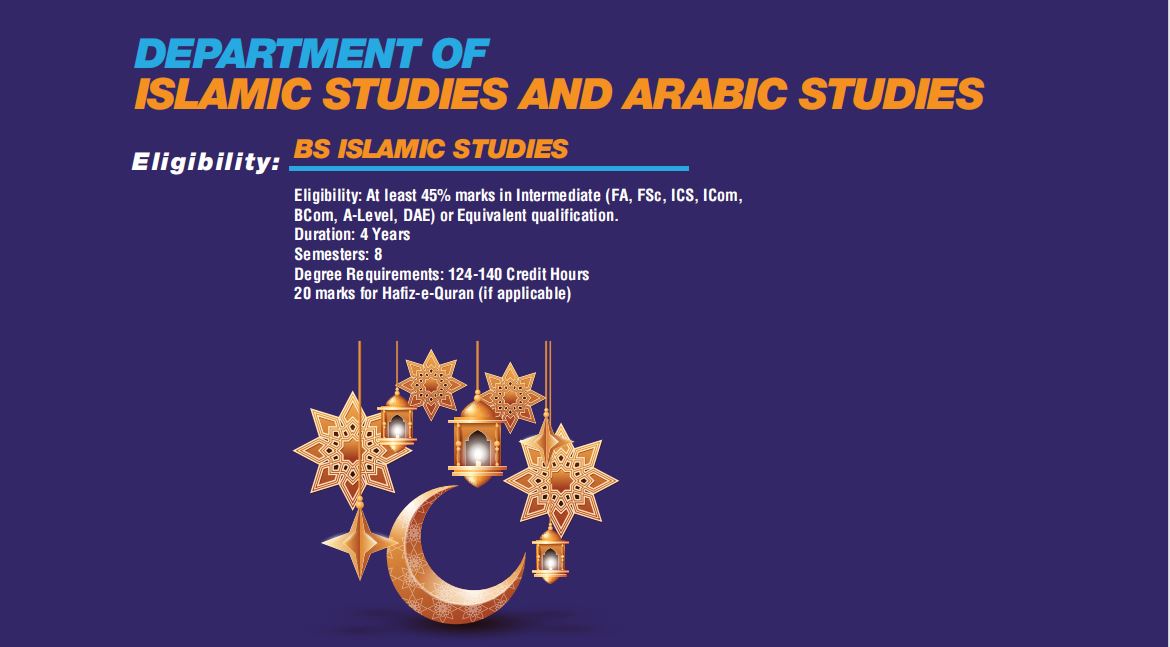
Admission to the BS Islamic Studies program is based on academic merit and fulfillment of the following criteria. Applicants must meet the minimum requirements as set by the university and the Higher Education Commission (HEC) of Pakistan.
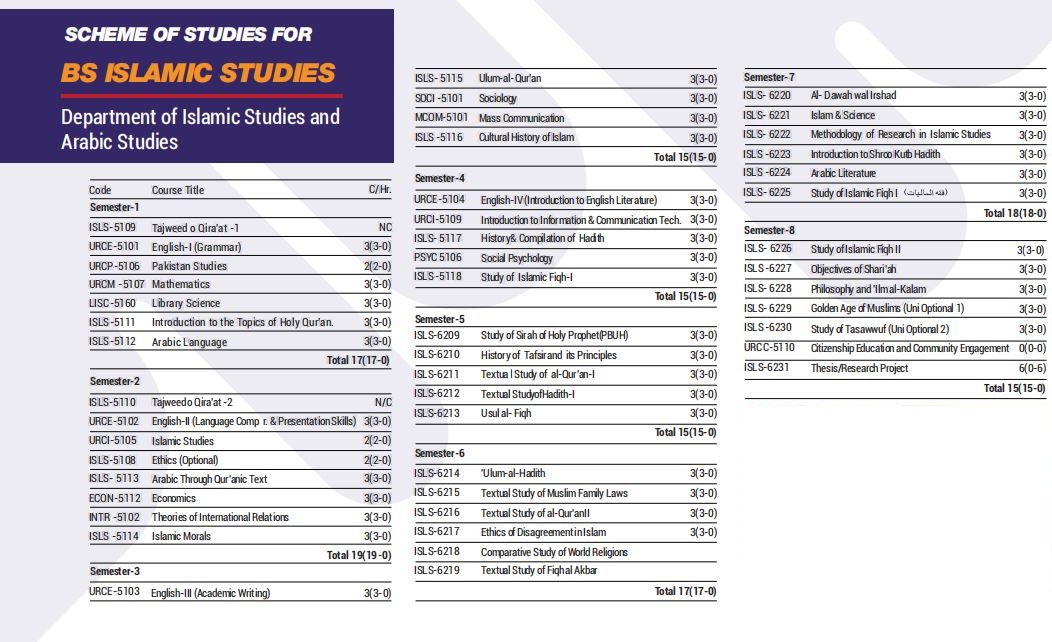
The BS Islamic Studies degree follows an 8-semester structure with core courses in Qur’an, Hadith, Fiqh, Islamic history, theology, and Arabic, along with general education. The curriculum builds from foundational texts and language to advanced disciplines and optional research in later semesters.
The Department of Islamic Studies is staffed by qualified faculty with expertise in Qur’an and Tafseer, Hadith, Fiqh, Islamic history, and Arabic. Full faculty listing and profiles will be updated here. For the latest information, please contact the department or the Faculty of Theology & Religion.
Faculty details will be published soon. Check back or contact the Faculty of Theology & Religion for the current faculty list.
A degree in Islamic Studies from Baba Guru Nanak University opens diverse career and further-study opportunities. Graduates are equipped for roles in education, research, religious guidance, and community and public-sector work, both in Pakistan and abroad.
The Department aims to strengthen teaching and research in Islamic disciplines, promote a sound understanding of Islamic sources and tradition, and produce graduates who contribute to education, scholarship, and ethical engagement in society in line with the university’s mission.